The UK Health Security Agency is continuing to look into an outbreak of meningococcal disease in Kent. As of 5pm on 17 March, there are 9 confirmed cases confirmed by lab tests and 11 cases still being looked into, making a total of 20 cases. Out of these, 6 are confirmed to be group B meningococcal disease.
Antibiotics are the best way to stop the infection from spreading. So far, over 2,500 doses have been given to students, people in close contact with the patients, and others, including some who went to Club Chemistry between 5 and 7 March.
Because this is a serious situation, a special vaccination program will start. First, students living at the University of Kent’s Canterbury Campus halls will be contacted directly. About 5,000 students are expected to be offered the vaccine. The UK Health Security Agency will keep watching the situation and may include more groups in the vaccination program if needed.
While we do not expect this to spread to our local area, we still believe it is important to provide information on this outbreak and the signs and symptoms of Meningitis to our patients in the pursuit of education and safety.
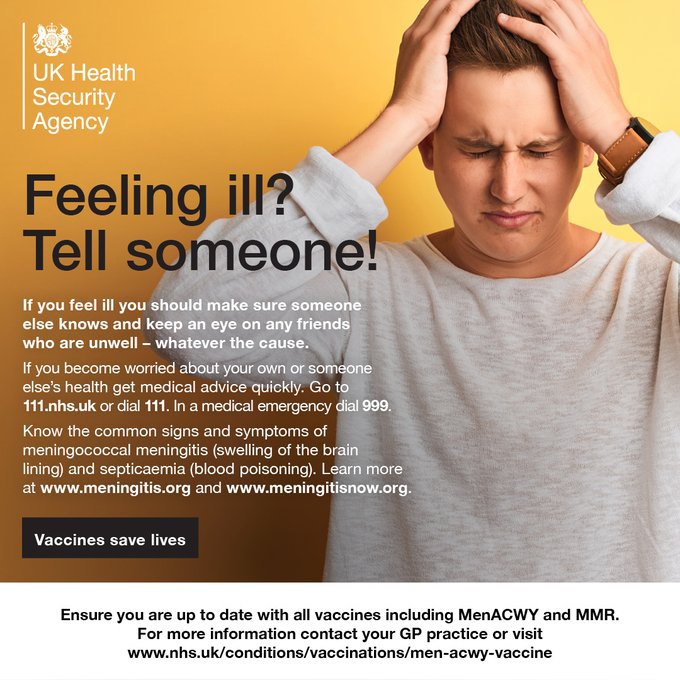
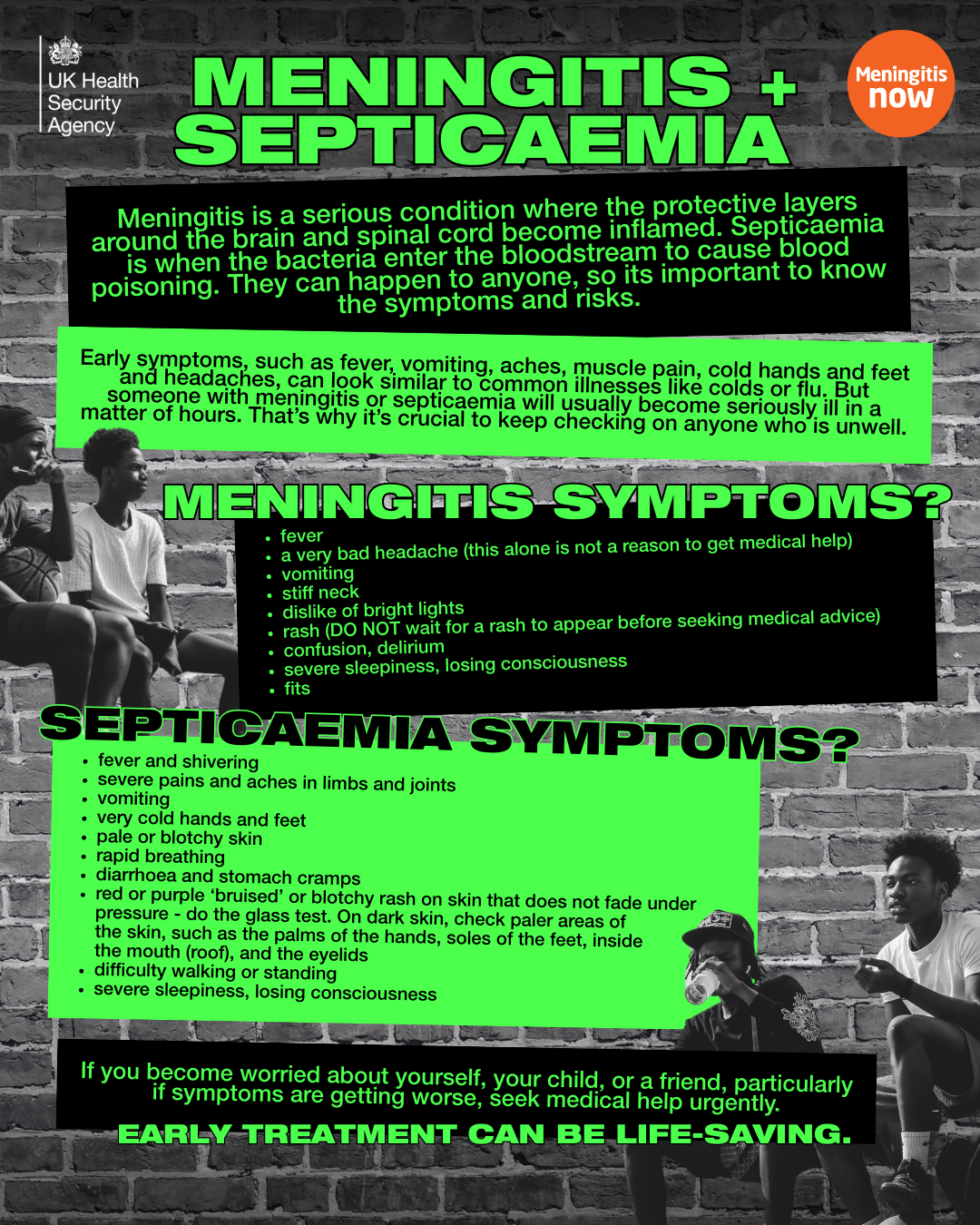
Early signs of meningococcal disease can look like a cold, flu, or even a hangover. Students might not notice these early warning signs. If you or someone you know gets any of these symptoms, get medical help immediately. Contact a doctor, call NHS 111, or call 999 in an emergency. Recognising the signs early and starting treatment quickly can save lives.
Meningococcal disease (which can cause meningitis or blood poisoning) is rare but serious. Sometimes, it causes swelling of the brain’s lining or blood infections, which can develop very quickly and be life-threatening.
Symptoms to watch for include:
- A rash that doesn’t fade when pressed with a glass
- Sudden high fever
- Severe headache that gets worse
- Stiff neck
- Vomiting or diarrhea
- Muscle and joint pain
- Sensitivity to bright lights
- Cold hands and feet
- Seizures
- Confusion or becoming very out of it
- Extreme sleepiness or trouble waking up
Young people starting university or college are at higher risk because they meet many new people, some of whom might carry the bacteria without knowing it.
There are different types of meningococcal bacteria. The MenACWY vaccine protects against some of these types (MenA, MenC, MenW, and MenY) and is usually given to teenagers in school Years 9 and 10. But this vaccine doesn’t protect against all strains, like MenB, which can also infect young adults. That’s why it’s important to know the symptoms so you can get help quickly if needed. Early detection and treatment can save lives.
For more information about meningococcal disease:
- Meningitis – NHS
- The Meningitis Research Foundation
Monday to Friday, 9am to 5pm
UK: 080 8800 3344
Republic of Ireland: 1800 41 33 44 - Meningitis Now
0808 80 10 388
(9am to 4pm Monday to Thursday and 9am to 1pm Friday)